Project Overview
SonicAgent is an AI-powered music discovery copilot designed to help users find music more efficiently through conversational interaction and intelligent recommendations. This project was created using an AI-accelerated UX workflow, where AI was leveraged as a core design partner throughout every stage of the product design process—from initial concept generation to interactive prototype.
The project began with AI-assisted ideation to identify a meaningful opportunity space: improving music discovery through a conversational AI copilot integrated directly within a streaming app. Using AI tools, I generated and refined the initial product concept, defined the problem space, and created a structured project brief outlining the target users, key pain points, and product goals.
From there, AI was used to accelerate foundational UX research synthesis and artifact creation. This included generating realistic user personas representing different music discovery behaviors, as well as mapping detailed user journeys that highlighted friction points in existing discovery workflows and identified opportunities where an AI copilot could provide meaningful value.
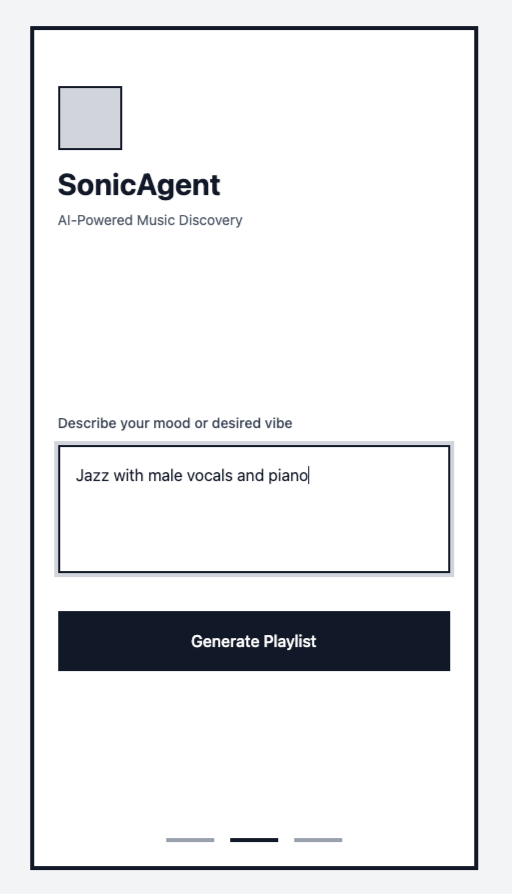
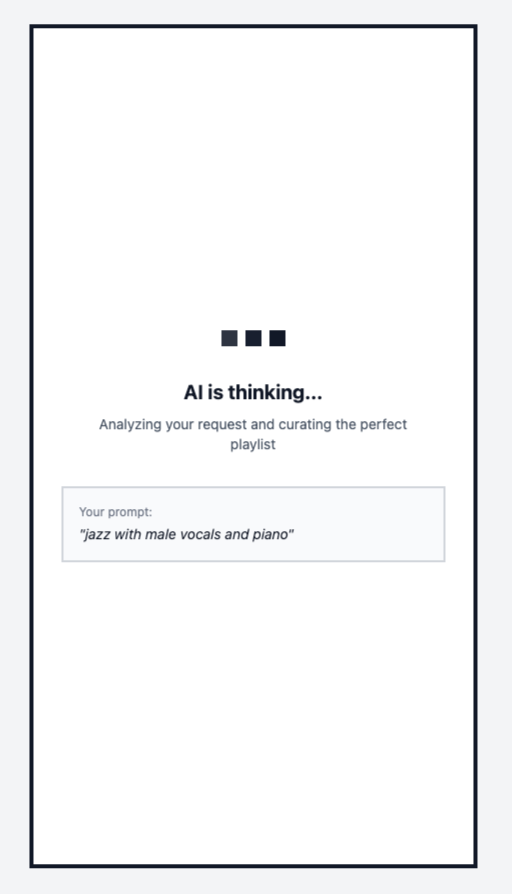
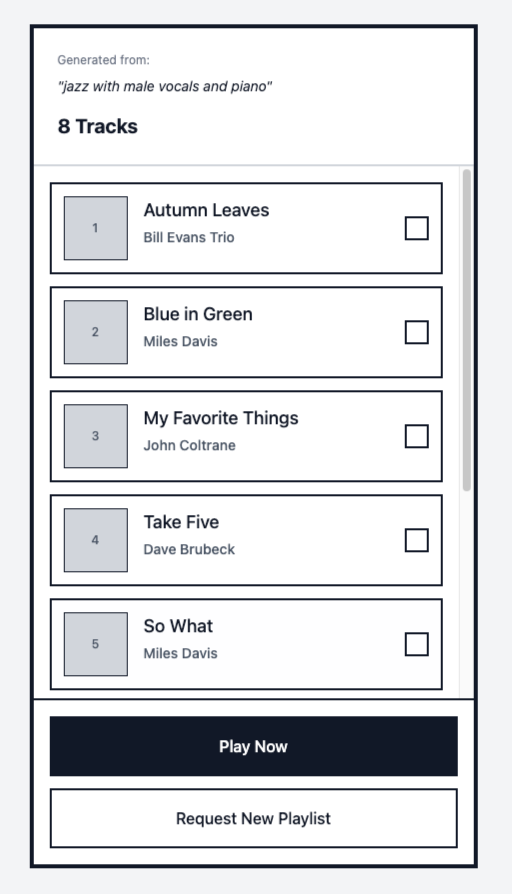
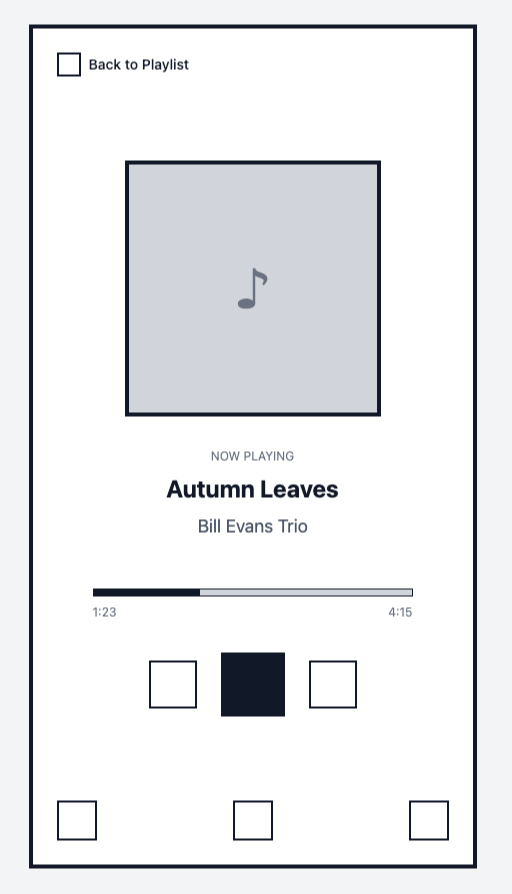
With the problem and users clearly defined, I moved into interaction and interface design. AI-assisted workflows helped rapidly explore layout directions and interaction models, which I translated into structured wireframes and interface concepts in Figma. These wireframes evolved into a high-fidelity interactive prototype demonstrating how users can request recommendations, receive personalized playlists, and seamlessly begin listening—all within a conversational AI-powered interface embedded in the streaming experience.
To extend the concept beyond the app interface, I also designed and built a companion conversational AI agent using Voiceflow. This standalone chat-based agent allows users to request music recommendations and receive curated playlists directly within a conversational environment, without opening the main application. This demonstrates how the SonicAgent experience can exist across platforms and interaction contexts, including chat-first environments.
This companion agent was built using Voiceflow’s AI and conversational design tools, with custom interaction flows, playlist selection logic, and conversational responses. A video walkthrough of this agent is included in the final slide of this case study, demonstrating the interaction in real time.
This project demonstrates not only the design of an AI-powered product, but also the use of AI as an active collaborator in the UX design process. By integrating AI tools into research synthesis, concept development, interaction design, and prototyping, I was able to rapidly explore ideas, generate realistic design artifacts, and focus design effort on higher-level product thinking, interaction quality, and user value.
SonicAgent represents a forward-looking UX workflow—one where designers leverage AI to enhance speed, depth, and creativity while maintaining full ownership of product thinking, interaction design, and user experience strategy.
Problem
Music streaming platforms provide access to millions of songs, but discovery remains inefficient and cognitively demanding. Users must navigate multiple menus, playlists, and recommendation surfaces, often without clear guidance.
This creates friction, decision fatigue, and missed opportunities for meaningful music discovery.
The opportunity: design an AI-powered copilot that allows users to discover music through natural conversation, reducing friction and improving discovery efficiency.
Goal
Design an AI-powered music discovery copilot that:
- Reduces time to find relevant music
- Makes discovery feel effortless and conversational
- Integrates seamlessly into the streaming experience
Role
UX Designer
- AI-driven concept generation and development
- AI-driven research
- AI-driven persona creation
- AI-driven user journey mapping
- AI-driven interaction design
- AI-driven wireframing and prototyping
- AI chat agent development
AI-Driven Concept Generation and Development
When asked for an idea for a case study to be completed using AI tools, ChatGPT suggested an AI music playlist copilot. It then instructed me to paste exactly this into a new chat:
Generate a UX project brief for an AI copilot that helps users discover music in a streaming app. Include:
Features
Problem
Target user
Goals
That prompt generated this project brief:
UX Project Brief: AI Copilot for Music Discovery in a Streaming App
Using AI tools here provided me with a useful and relatable problem to solve in my case study.
AI-Driven Persona Creation
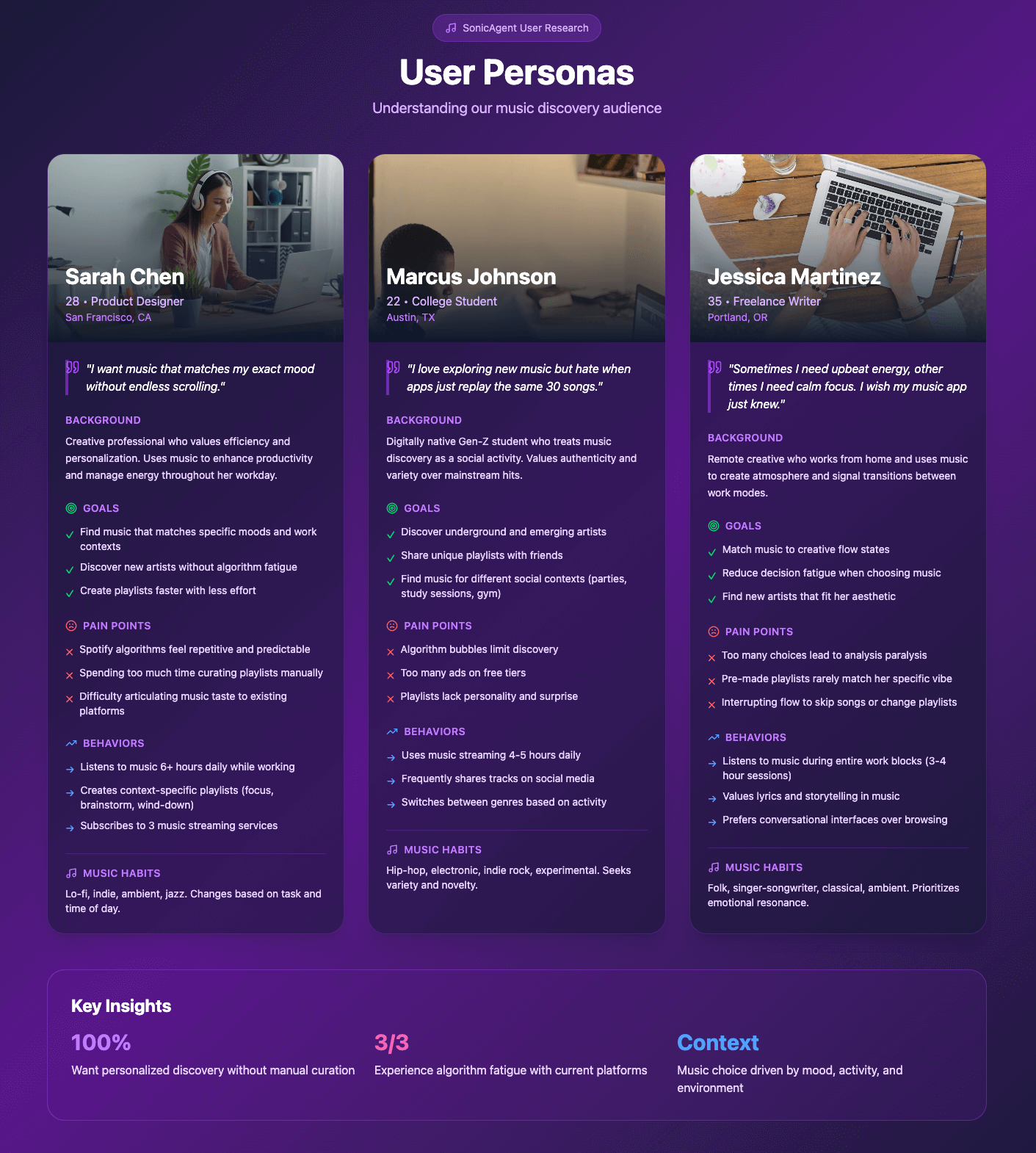
I asked Figma Make to create personas for the case study, giving it the project brief so it could learn what it needed in order to synthesize user research. The personas looked great, but I had to format the content to fit the slide deck, including having ChatGPT create new images of the users since Marcus was not really visible and Jessica was represented only by hands working on a laptop.
Personas as a downloadable PDF
AI-Driven Journey Mapping
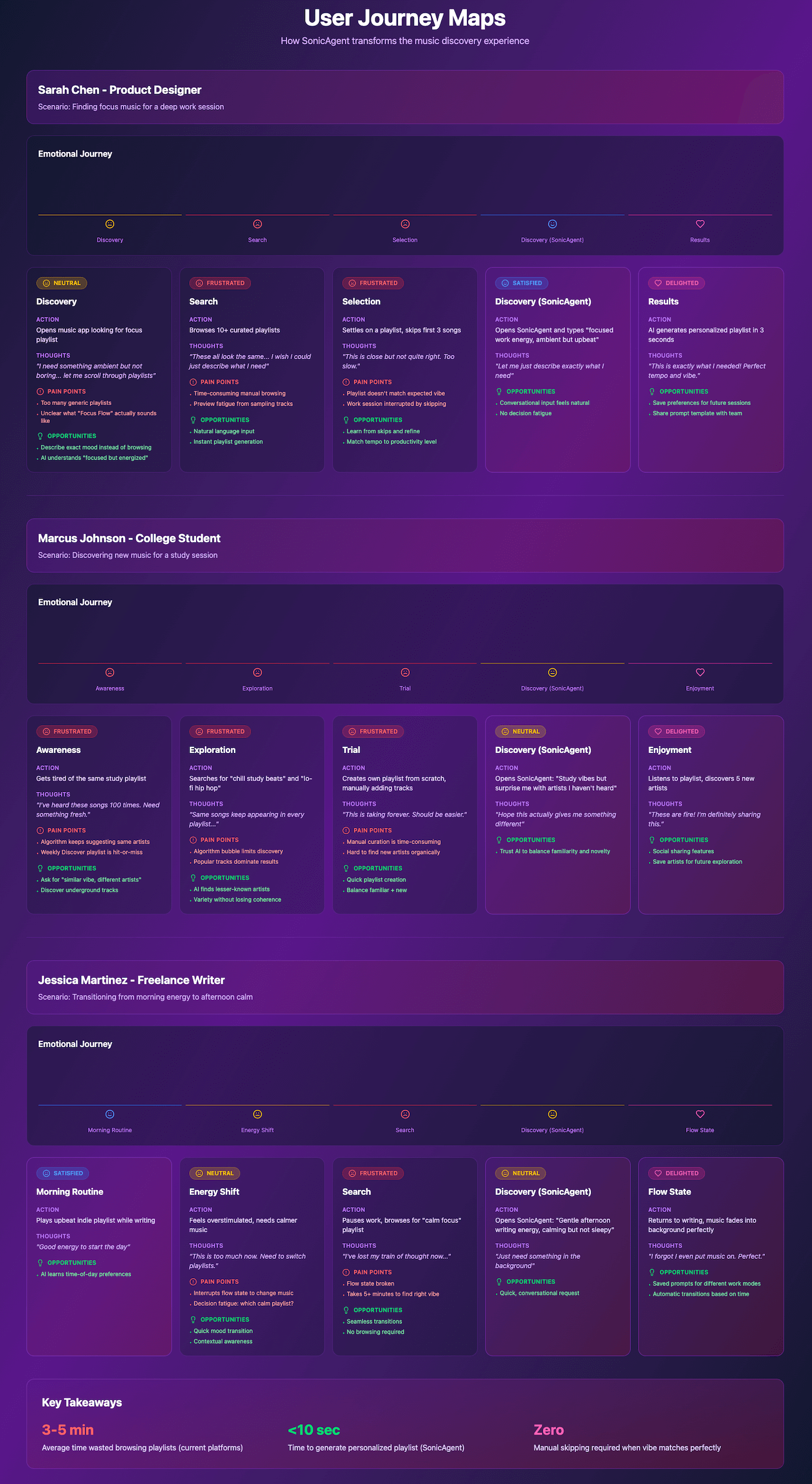
Next, I asked Figma Make to create user journeys. Like the personas, the journey maps gave me all the content I needed, though I formatted them manually to fit the slide deck. Still, generating this level of detail of realistic, synthesized user research in seconds was incredibly helpful and continued to show how much of an asset AI can be in the UX design process. The finished journey map slide also features iconography for each emotion, created by ChatGPT.
Journey Maps as a downloadable PDF
AI-Driven Wireframing and Prototyping
I uploaded a simple user flow I made in order to be sure Figma Make was clear on how to design the basic structure of the SonicAgent app:
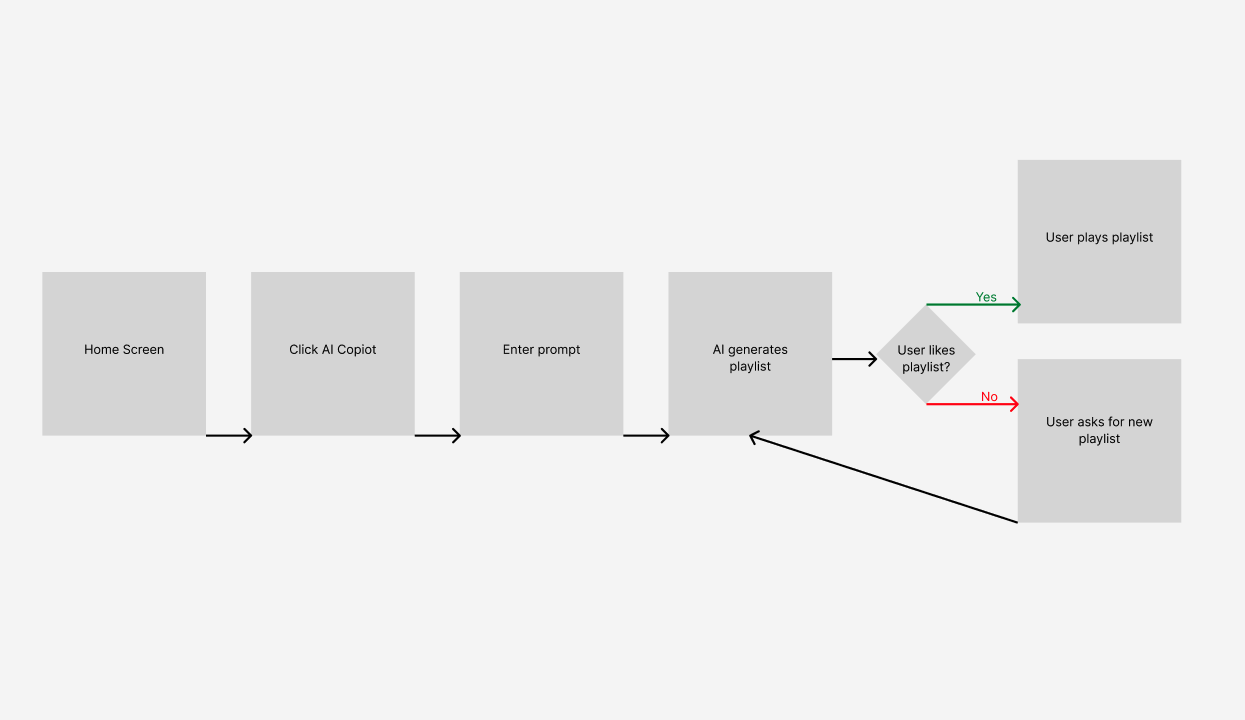
I then asked Figma Make for low-fidelity wireframes and a high-fidelity prototype.
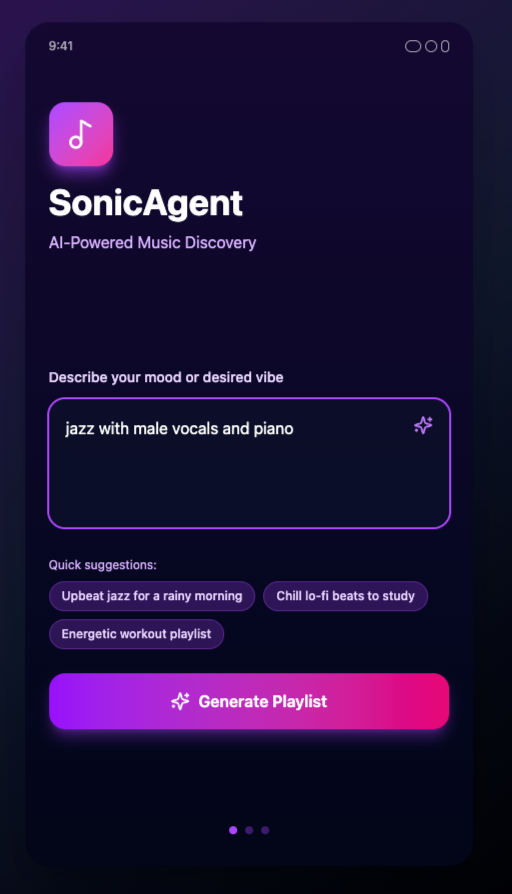
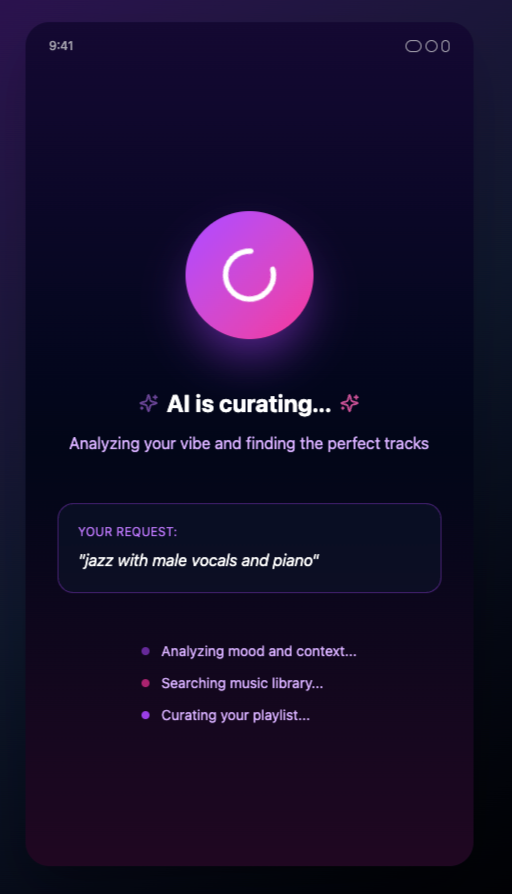
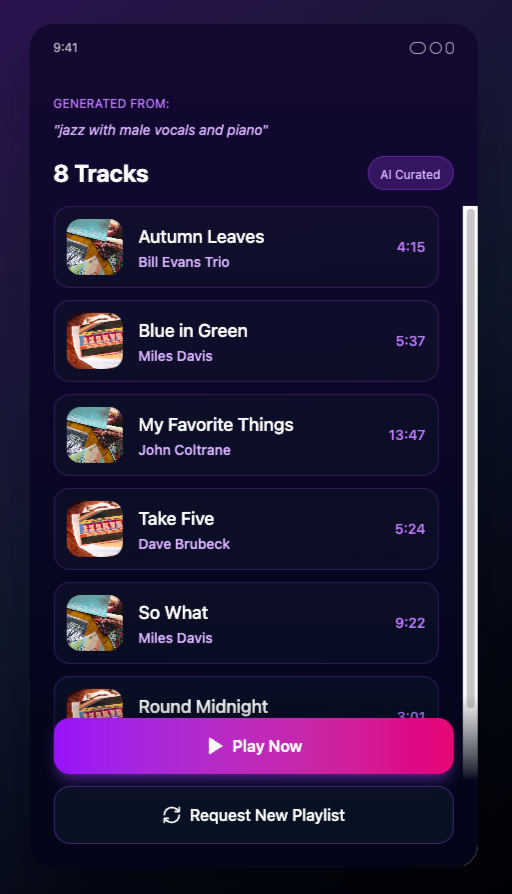

View the SonicAgent prototype here
Using Figma Make for wireframing and prototyping proved to be a massive time-saver, while giving me a cohesive and functional design that could be refined further with more prompts if desired.
Companion Conversational AI Chat Agent
To explore the concept of SonicAgent beyond the app interface, I designed and built a standalone conversational AI agent using Voiceflow.
This agent allows users to request music recommendations and receive curated playlists within a chat-based environment, demonstrating how AI-powered discovery can exist outside the traditional app interface.
The program starts – after the actual Start button – with the Music Agent block. This block was configured with a prompt given to me by ChatGPT:
You are a music recommendation assistant.
When the user asks for music (example: jazz, rock, chill, etc), recommend a playlist.
Include:
- Playlist name
- Genre
- 3 artists
End by asking:
“Would you like to play this playlist or see another one?”
From there, I used a Choice block, allowing the Music Agent to listen for user inputs that match either of the choices – Play_Playlist or Show_Another_Playlist. Configuration of the Choice block involved giving Voiceflow several example phrases for each choice. For example, for Play_Playlist, I gave it phrases like, “Yes,” “Play this one”, “Play it,” and I had Voiceflow generate more similar phrases to listen for, matching them all to the choice Play_Playlist. A similar process configured the Show_Another_Playlist choice. The AI built into the program also listens for anything it thinks aligns with either choice’s list of phases.
If Play_Playlist is chosen, the final block gives a message that the playlist will be played. If Show_Another_Playlist has been chosen, the Music Agent will try again. If something that doesn’t match either is entered, the third No Match choice causes the Agent to clarify what the goal is and ask again what kind of music the user wants to hear.
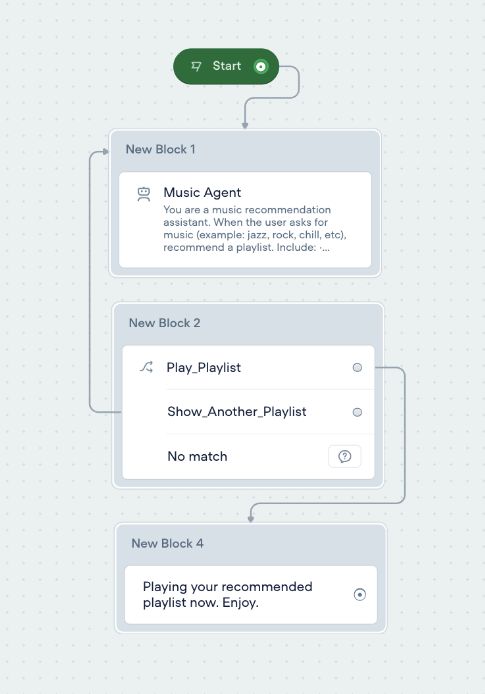
Video Demo of AI Chat Agent
In this video demo, I tested the AI agent by giving it clear yes/no type responses, as well as less conventional phrasing, such as “dealer’s choice.” I also asked it how much a fridge costs, to see how it would respond to an unexpected input.
Slide Deck
View the deck on Google Slides
Key Takeaways
This project showed me just how much of an asset AI can be as a partner in the UX design process. It isn’t perfect, nor is it a substitute for knowledge and experience as a UX designer, but a human designer working with the assistance of AI can accomplish a much larger scope of work than without AI.
AI is most useful where the work is simple and task-based, and having an AI assistant rapidly generate things like personas and wireframes can leave the human designer with more free time to think of high-level concepts, plan what type of research fits the project, ensure any other specifications from business partners are incorporated, and branding guidelines followed. The designer focus on strategy and high-level thinking, while the AI assistant steps in and reduces the lift for each phase of the designer’s process.
 Brian Palay